
















Working From a Corner: Home Office Ideas When You Don't Have an Office
Plenty of "home offices" are a corner of the bedroom, a stretch of kitchen counter, or half the dining table negotiated nightly with whoever wants to eat dinner there. The challenge isn't just organizing the work — it's making the office appear at nine and disappear at five, so your home stays a home and doesn't quietly turn into a workplace that never clocks out. Home office organization in a shared space is less about equipment and more about boundaries you can actually see, because there's no door to signal where work ends and everything else begins. The good news is that a real, functional setup doesn't require a spare room — it requires a system that can pack up and disappear on command.
The office-in-a-bin approach
When your desk is the dining table, your office needs to be portable, full stop. One felt bin holds the entire operation — laptop stand, notebook, chargers, pens, the notepad with this week's to-do list — so nothing has to be hunted down each morning before you can start working. Work starts when the bin lands on the table and ends when it's carried back to its shelf. The commute is eight steps, and the ritual does what a door normally does: it separates work time from everything else, which matters even more when there's no physical door to close. Because everything lives in one felt bin instead of scattered across drawers and counters, packing up at the end of a work session takes under a minute instead of turning into its own small chore.
Claim vertical territory
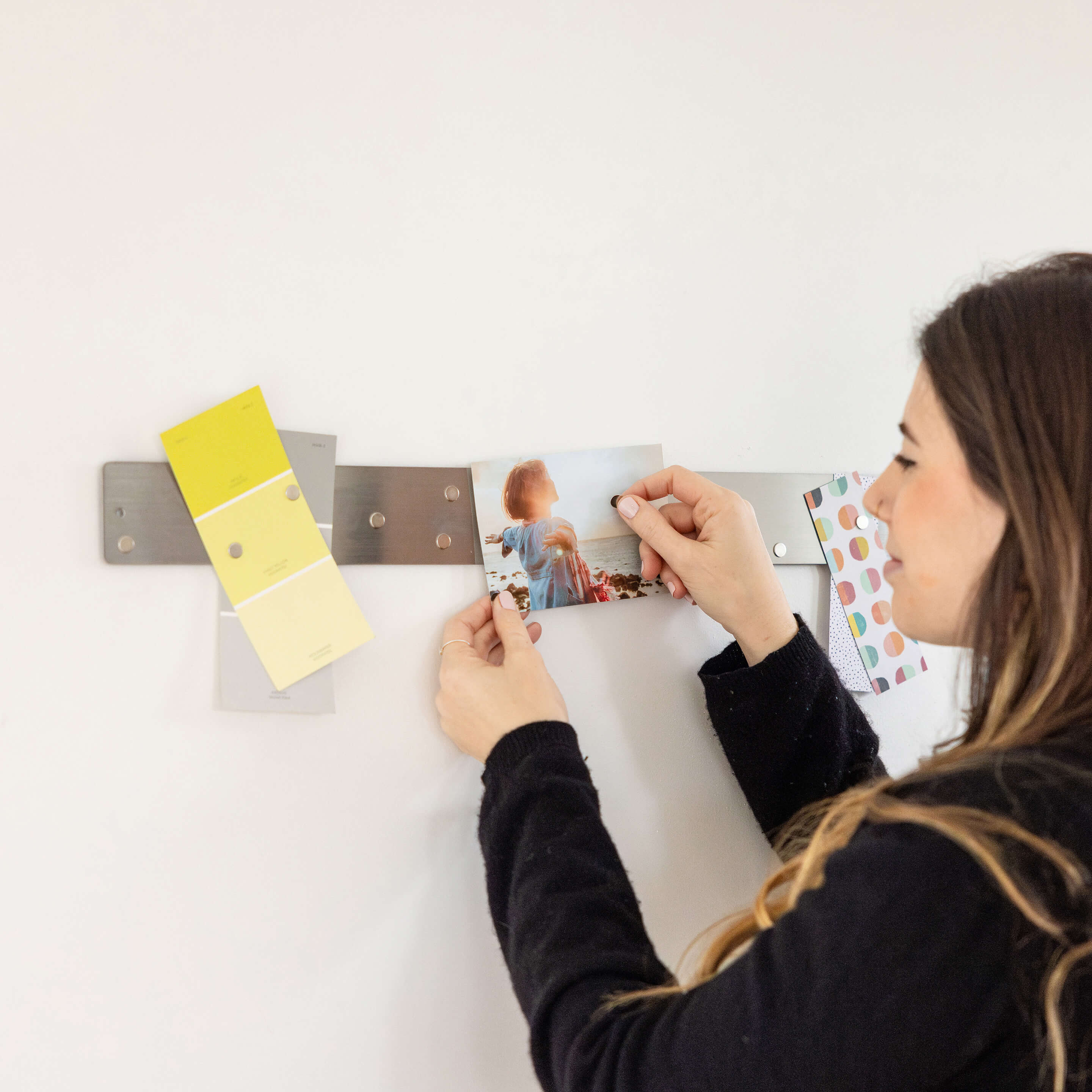
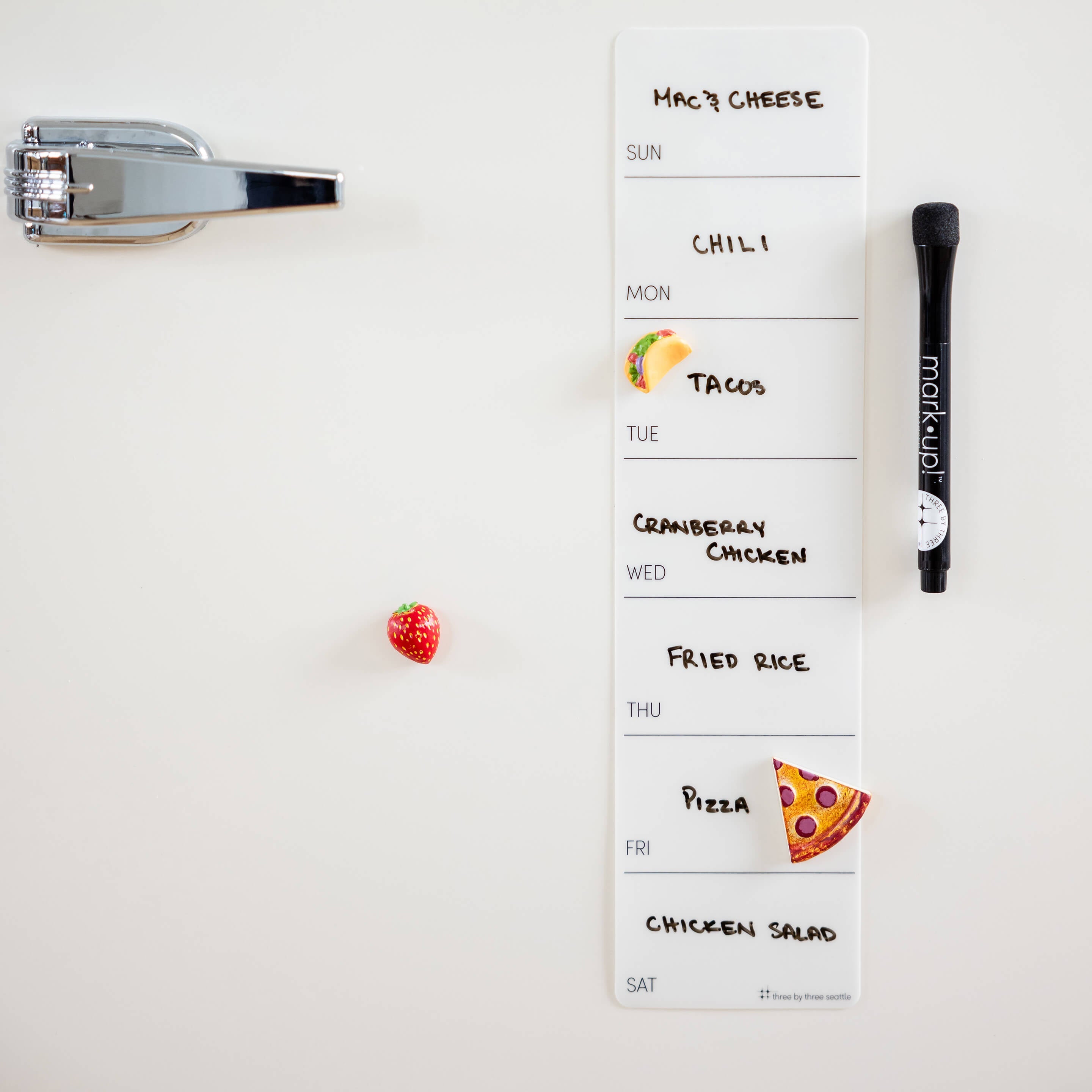
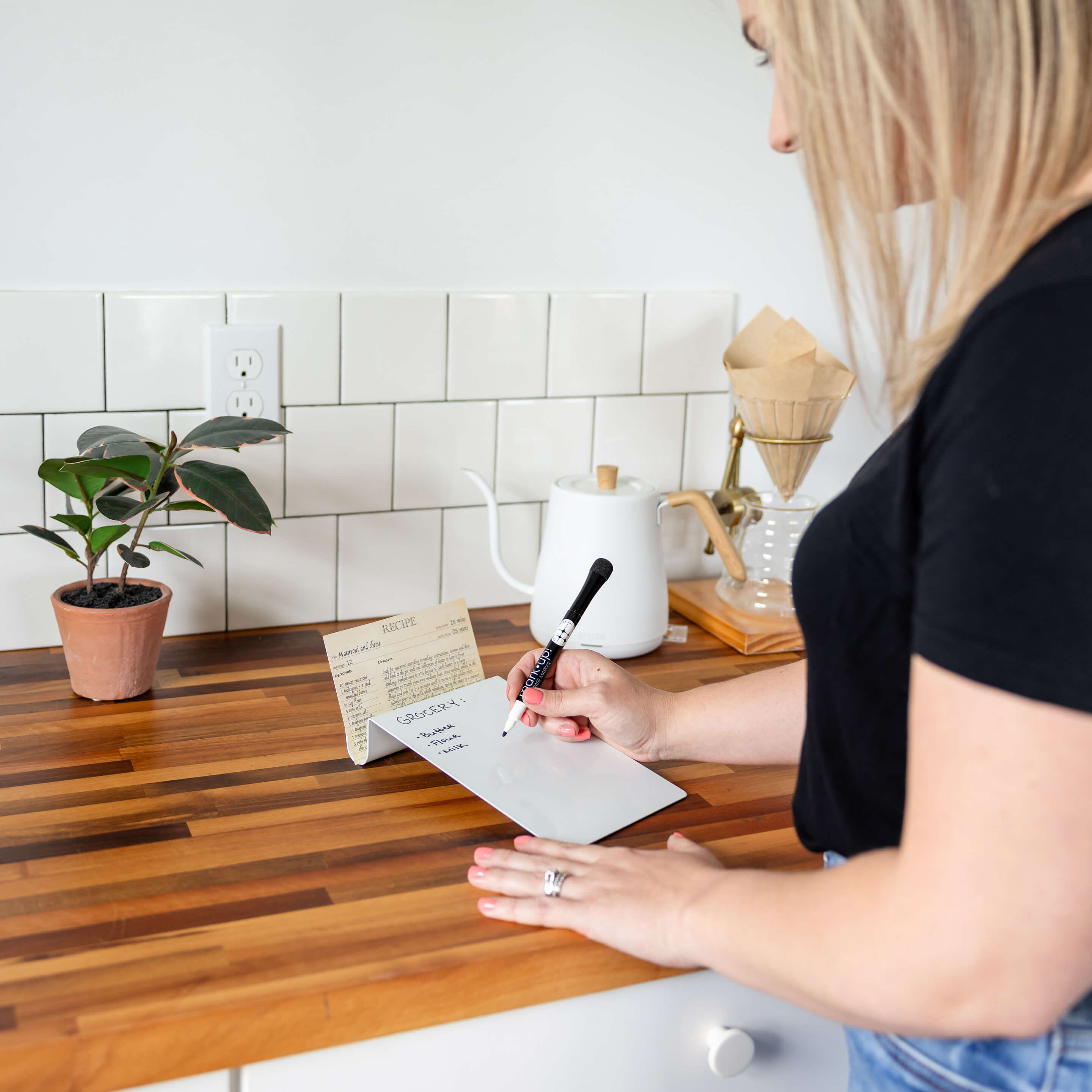
You may not get a room, but you can usually get a slice of wall, even a narrow one behind a shelf or beside a bookcase. A compact dry erase planner plus a small magnetic board turns any corner into a legitimate workstation — schedule visible, active papers pinned, zero floor space spent on furniture you don't have room for. When guests come, your whole office reads as intentional, not scattered, because the wall does the organizing that a desk would otherwise have to do alone.
Divide the drawer you're allowed
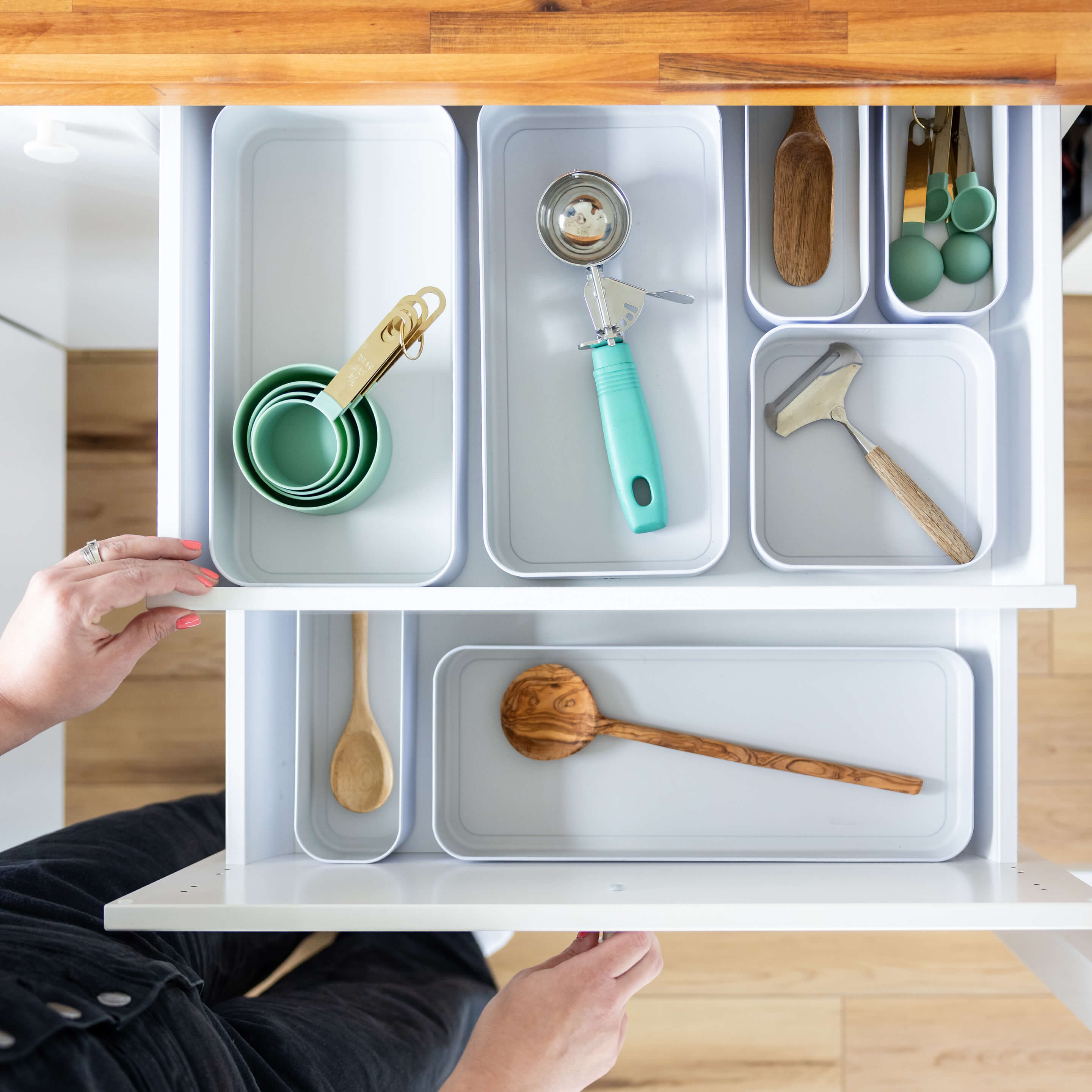
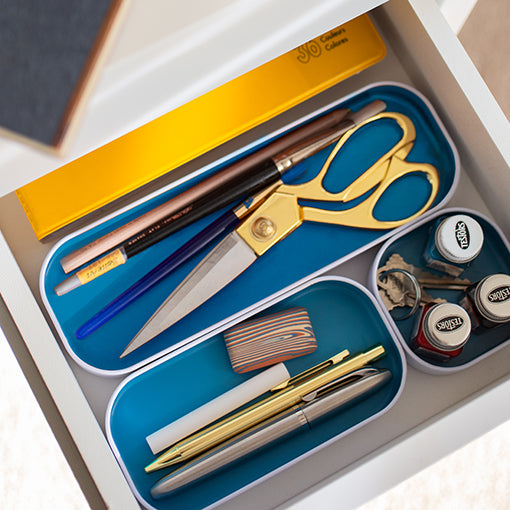
Shared-space workers usually get one drawer, if that, so it has to work harder than a whole desk's worth of drawers would in a dedicated office. Make it count: stacking metal organizers split it into supplies, cables, and paperwork territories, so the single drawer functions like three separate ones. The difference between one messy drawer and one organized drawer is the difference between having an office and having a stash you dig through every morning looking for a working pen.
Borrow storage from furniture that isn't a desk
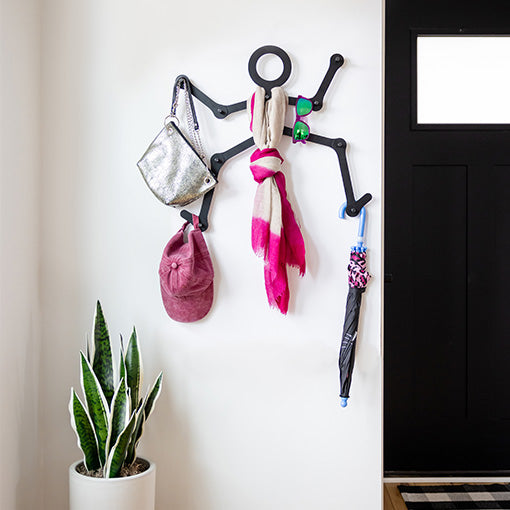
A dedicated office has a filing cabinet and a supply closet; a corner setup has whatever furniture is already there. A stacking bin on a bookshelf, a felt bin tucked into an ottoman with storage, or a slim organizer on the back of a closet door can absorb the overflow that a single drawer can't hold. Look for dead space nearby — under a console table, the top of a closet, a gap beside the couch — before assuming you need to buy a new piece of furniture just for work supplies.
Shut the office down like you mean it
The end-of-day close matters double in shared spaces: bin packed, board updated, table cleared back to its dinner-ready state. Work that lingers visually lingers mentally, and a laptop left open on the table has a way of pulling you back to check "just one more email" during what should be family time. When the office vanishes cleanly, dinner at that same table feels like a different room — which is the entire point of building a shutdown ritual instead of just hoping you'll remember to stop.
Frequently asked questions
How do I "have an office" without a dedicated room?
Make it portable — one felt bin holds your entire workspace (laptop stand, notebook, chargers, pens) and travels to wherever you're working that day.
What's the best way to use limited wall space for work?
A compact planner plus a small magnetic board turns any corner into a legitimate workstation without using any floor space.
How do I keep work from bleeding into family time?
Shut it down deliberately each evening: bin packed, board updated, table cleared. A visible office lingers mentally even after hours.
What if I only get one drawer for work supplies?
Split it with stacking metal organizers into supplies, cables, and paperwork territories, so one drawer effectively functions like three.
Is a portable office setup actually practical long-term?
Yes — many shared-space workers use it daily for months or years. The bin-and-board system is quick to deploy and just as quick to disappear at 5pm.