


















The Laundry Zone: Making Wash Day Work in a Closet, Corner, or Actual Room
"Laundry room" is generous for what most homes have — a closet with a stacked unit, a corner of the garage, a machine wedged into a kitchen alcove. Whatever the footprint, real laundry room organization comes down to the same four things: products, the waiting, the clean, and the strays. Get those four systems right and the space stops feeling like a chore closet and starts running itself, whether you're working with a full utility room or eighteen inches next to the water heater. The goal isn't a magazine-perfect shelf — it's a workflow that survives a Tuesday when everyone's out of clean socks at the same time.
Products: one shelf, not a skyline
Detergent, softener, stain stick, delicates wash — corral them into one felt bin instead of a loose row of bottles that topples every time you grab the jug. A felt bin here has a hidden virtue: it catches the drips and rings that otherwise laminate the shelf in a permanent film of spilled softener. Pick a bin sized to the shelf, not the products, so you're not buying extra bottles just to fill the space. Backstock — the extra jugs from the last warehouse-club run — lives elsewhere, in the garage or a hall closet; the laundry zone itself holds only what's currently in rotation. It's the same rule that keeps a kitchen counter usable: active items stay within arm's reach, and everything else gets stored one room away.
The waiting: sort at the hamper, not the machine
Sorting on wash day is a chore; sorting all week is free. Two or three felt bins where the hamper lives — lights, darks, delicates — means every load is pre-built before you ever touch the machine. Household members sort their own laundry at drop-off, which is a chore delegated to physics instead of nagging. Label each bin plainly so a seven-year-old can use the system without being told twice; the whole point of a hamper station is that it keeps working without supervision. If space allows, a fourth bin marked "needs stain treatment" catches problem items before they get buried in the regular wash and forgotten.
Stain treatment: catch it before it sets
Every laundry room needs a spot for the in-between step — the shirt that needs pretreating, the jersey with the grass streak down one sleeve. A small felt bin or a single labeled shelf slot for stain stick, spray, and a soft-bristle brush keeps that step from turning into a whole countertop project. The rule is simple: nothing goes into the regular wash with a known stain until it's been treated, because dryer heat sets what pretreatment could have lifted right out.
The strays: give orphans a home
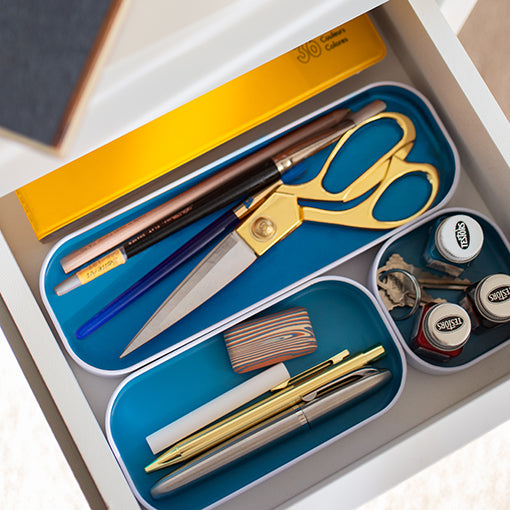
Every laundry zone generates artifacts: the single sock, the pocket coins, the mystery button, the hair tie that somehow survived the dryer. A small dedicated bin for orphans ends the windowsill museum and the pile that creeps across the top of the machine. When the bin fills, match the socks that found their partners and release the rest — the ecosystem self-regulates if you let it. A shallow drawer organizer works well here too, with small compartments for coins, buttons, and safety pins so the tiny stuff doesn't just migrate into one chaotic catch-all bin of its own.
Small tools deserve small storage
Sewing kit, lint roller, spray starch, dryer balls — the small tools of laundry day multiply fast and rarely have an obvious home. A drawer organizer or a stacking organizer on the shelf above the machine keeps these from sliding into a junk pile behind the detergent. Stacking organizers earn their keep in a laundry zone specifically because they let you use vertical space without digging — pull the top bin, then the one below it, instead of excavating one deep shelf every time you need a spare button.
The fold-now doctrine
Organization can't save you from the chair of unfolded clothes — only sequencing can. The load isn't done when the dryer stops; it's done when it's folded and delivered to the right room. Zones make that faster — a felt bin per person or per category turns folding into sorting into delivery in one motion — but the doctrine does the heavy lifting. Set a timer if you have to: five minutes from buzzer to folded stack is achievable, and every minute past that is when the pile starts to calcify into furniture. A well-organized laundry room only pays off if the last step actually happens.
Frequently asked questions
How should laundry products be stored?
Corral detergent, softener, and stain stick into one felt bin instead of a loose row — it also catches drips before they laminate the shelf.
When should laundry actually get sorted — wash day or all week?
All week, at the hamper. Pre-sorted felt bins for lights, darks, and delicates mean every load is already built by wash day.
What do I do with the stray socks and mystery buttons?
Give them one small dedicated bin so they stop colonizing the windowsill, and periodically match what you can and release the rest.
How many sorting bins do I actually need?
Two or three is plenty for most households — lights, darks, and delicates — positioned right where the hamper lives.
What's the fold-now doctrine?
The idea that a load isn't finished when the dryer stops, only when it's folded and put away — zones speed this up, but sequencing is what actually gets it done.