





















The Dorm Room Formula: Organizing 100 Square Feet You Share With a Stranger
A dorm room is a studio apartment minus the kitchen, bathroom, and most of the square footage — shared with someone you met on move-in day and are now trusting with your sleep schedule. Everything you own must fit in half of very little, so every choice needs to earn its space twice: once for what it does, and once for how little room it takes up doing it. Dorm organization isn't really about being tidy for its own sake — it's survival math for a room smaller than most walk-in closets.
Soft storage or no storage
Rigid organizers are a dorm tax: they don't compress for the drive, don't forgive tight corners in a closet built for one person's stuff instead of two, and don't survive the move-out toss when everything has to be packed in an afternoon. Felt bins do all three — they pack flat-ish coming in, structure the closet shelf and under-bed zone all year without cracking, and come home in one manageable stack in May. Nesting sizes mean one set covers everything from desk clutter to sweater storage, so you're not buying a different plastic bin for every category of stuff you own.
The under-bed is your basement
Risers turn under-bed into your largest storage zone, and in a dorm room that's not a minor upgrade — it might double your usable storage. Off-season clothes, backstock snacks, the printer you use twice a semester, extra bedding — binned, labeled, slid under, out of the way until needed. The rule that keeps this zone useful instead of a black hole: under-bed is for monthly-or-less items only. Daily stuff belongs at arm's reach on a shelf or in a desk drawer, or it ends up dragged onto the floor and never put back.
Closet and desk: the two real storage zones
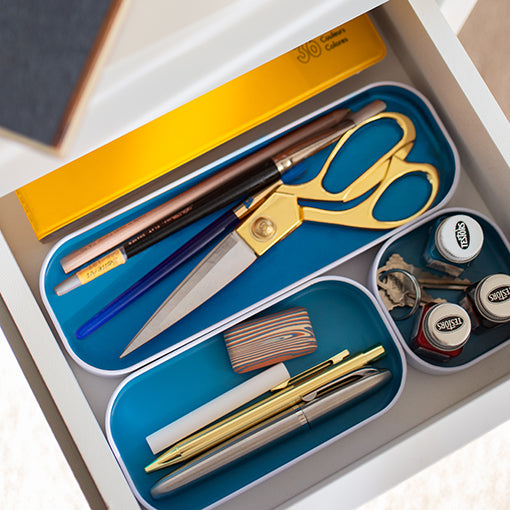
Outside of under-bed, almost all of a dorm room's storage comes down to one closet and one desk, so both need a deliberate plan instead of becoming a dumping ground. In the closet, felt bins on the shelf handle folded items while hanging space stays for what actually needs to hang — stacking clothes by category inside labeled bins beats a shelf of loose, sliding piles every time. On the desk, a stacking organizer or small drawer organizer keeps pens, chargers, and notebooks from spreading sideways across the one surface you need clear for actual studying. Small space living rewards this kind of specificity; vague storage plans fail fast in a hundred square feet.
Walls without wall damage
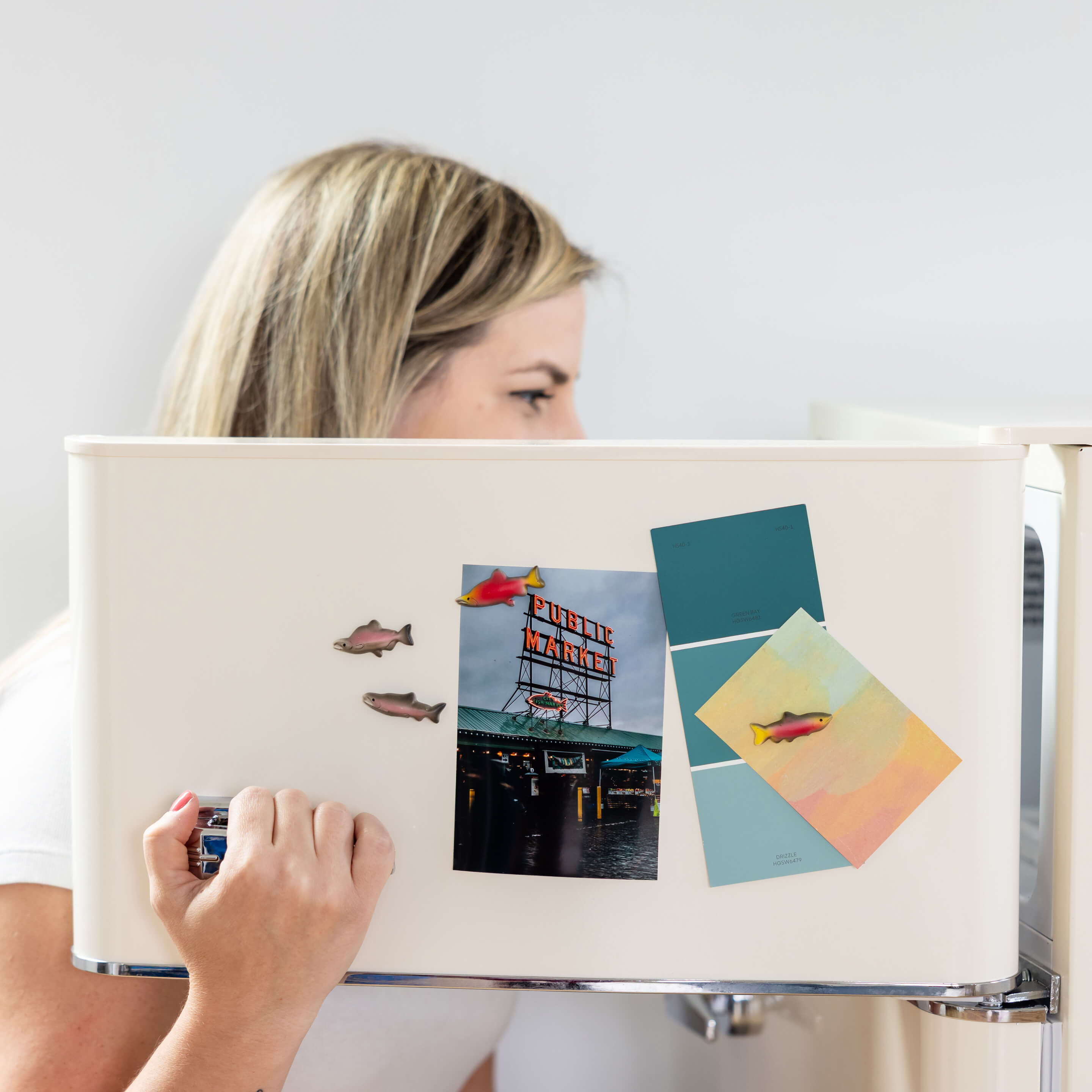
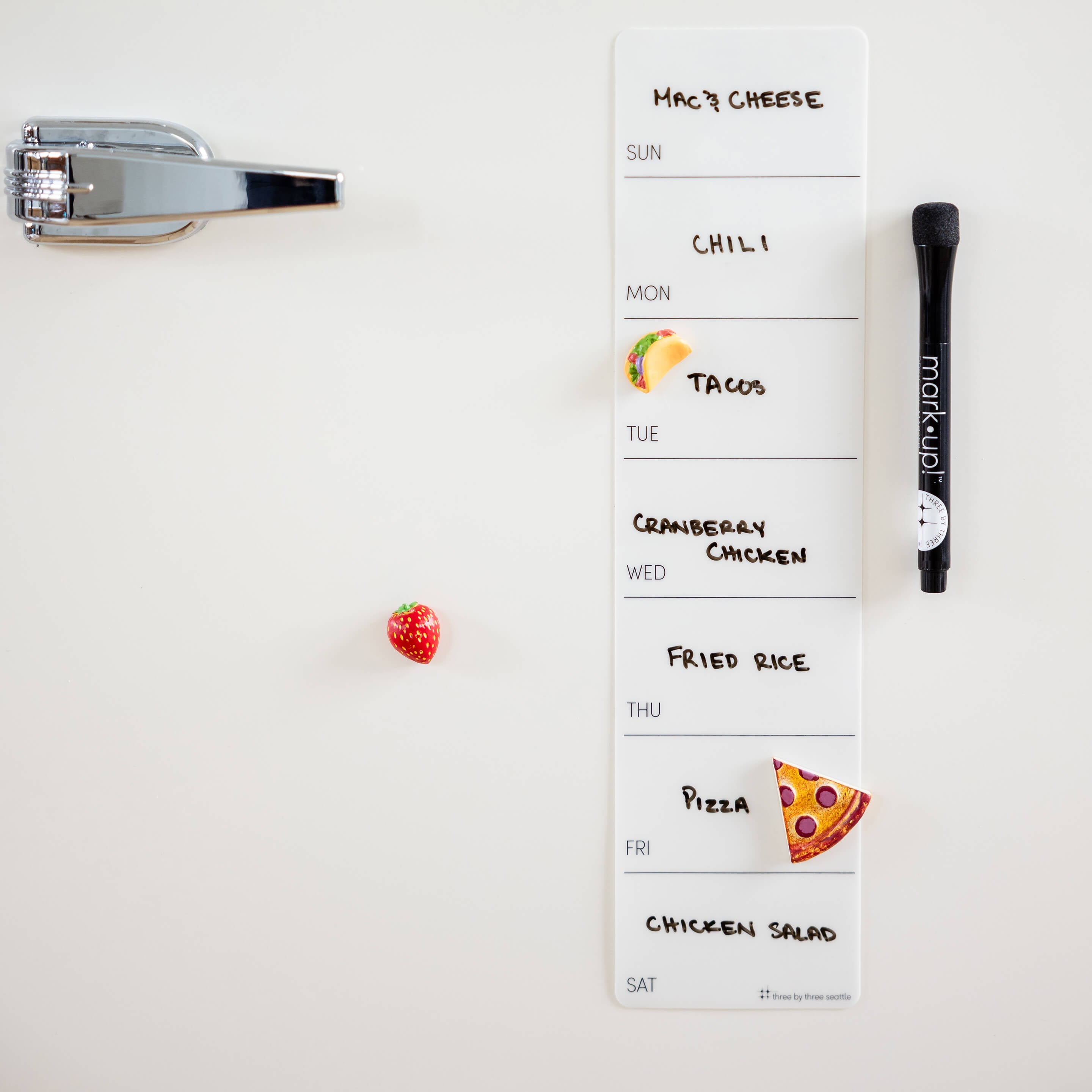
Every dorm shares a law: no holes, no exceptions, security deposit on the line. A magnetic bulletin board handles photos, concert tickets, and syllabus deadlines without a single pin through the paint — and a dry erase planner over the desk keeps the semester's assignments and exam dates visible at a glance instead of buried in a phone calendar nobody opens. Both come down in May in about thirty seconds, without forfeiting your damage deposit or leaving a ghostly rectangle of unfaded paint behind.
The roommate line
The happiest rooms define territory early and casually: your felt bins, their felt bins, one shared bin for communal stuff like snacks or a shared printer. Ambiguity, not mess, is what starts roommate friction — nobody's actually mad about a messy desk, but everybody gets mad about whose granola bar that was. Containers are diplomacy: a clearly labeled bin answers the "whose is this" question before it becomes an argument, which matters more over two semesters than it sounds like it should.
Packing for the drive there, and the drive back
Dorm organization actually starts before move-in, in how you pack the car. Felt bins that will do the storage job all year should also be the packing containers for the trip — no separate packing boxes to break down and store somewhere in a room with no spare space to store them. Labeling bins by destination room (desk, closet, under-bed) before you even leave home means move-in day is mostly carrying and placing, not sorting a pile of mixed boxes on the sidewalk while a line of other families waits behind you.
Frequently asked questions
Why are soft bins better than rigid organizers for dorms?
They pack flat-ish for the drive, forgive tight closet corners, and collapse for the move-out toss in May — rigid organizers do none of that.
What should live under the bed?
Anything used monthly or less — off-season clothes, backstock snacks, rarely-used gear — kept out of reach for daily items.
How do I decorate without violating no-holes rules?
A magnetic bulletin board and a dry erase planner both mount without a single pin or nail, and come down clean at move-out.
How do I avoid roommate friction over shared space?
Define territory early — your felt bins, their felt bins, and one shared bin for communal stuff. Ambiguity causes more friction than actual mess.
How many felt bins does a typical dorm room need?
Most students do well with a nesting set of three to five — enough to cover desk clutter, seasonal clothes, and under-bed storage without overcrowding a small closet.