



















The Desk Reset: Organize Your Workspace in One Lunch Break
A cluttered desk taxes you twice — once when you can't find things, and again in the low hum of visual noise while you're trying to think, the mental tax that clutter charges even when you're not actively searching for anything. The good news: a desk is a small country, not a continent. You can reorganize the whole thing in under an hour, and unlike a closet or a garage, you'll feel the payoff the very next time you sit down to work.
Clear it to bare wood
Everything off — every pen, every loose paper, every mystery cable, all the way down to bare wood or laminate. The desk earns items back one at a time, and the standard is daily use: if you don't touch it most days, it doesn't get a spot on the surface. The stapler you use monthly doesn't live on the surface — surfaces are for the every-day tier only: computer, notebook, one pen, maybe the coffee. Everything else earns a place in a drawer, or it leaves the desk area entirely.
Build a drawer hierarchy
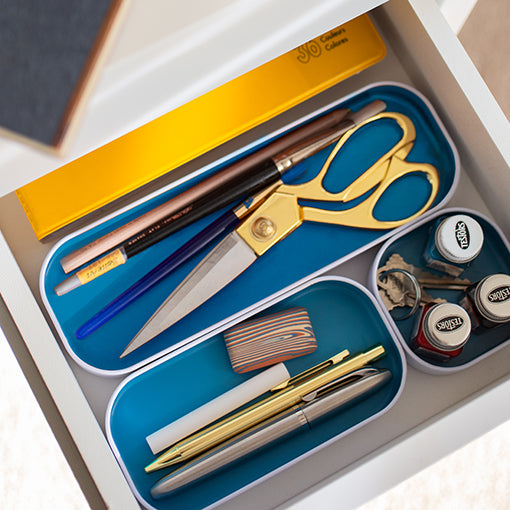
Top drawer: things you reach for daily, each in its own territory — metal stacking drawer organizersturn the pen-and-paperclip soup into a grid where everything has an address, so you're never digging through a loose pile to find the one working pen among six dead ones. Second drawer: weekly-use supplies, the stapler, the extra notepads, the spare charging cable. Anything used less than weekly leaves the desk entirely and moves to a closet or supply shelf, because a desk drawer is prime real estate and shouldn't be spent on things you touch twice a month.
Take notes somewhere that isn't a loose pile
Sticky notes multiply until they become wallpaper you no longer see, stuck to the monitor, the desk edge, and occasionally each other in a way that defeats the entire purpose. A chunky jOTBLOCK sketchpad gives quick notes one consistent home — jot, tear, done — and the day's scraps stop colonizing the keyboard zone or vanishing under a stack of folders. Because every note lives in the same spot, you also stop the small daily panic of "I wrote that phone number down somewhere."
Put the week on the wall
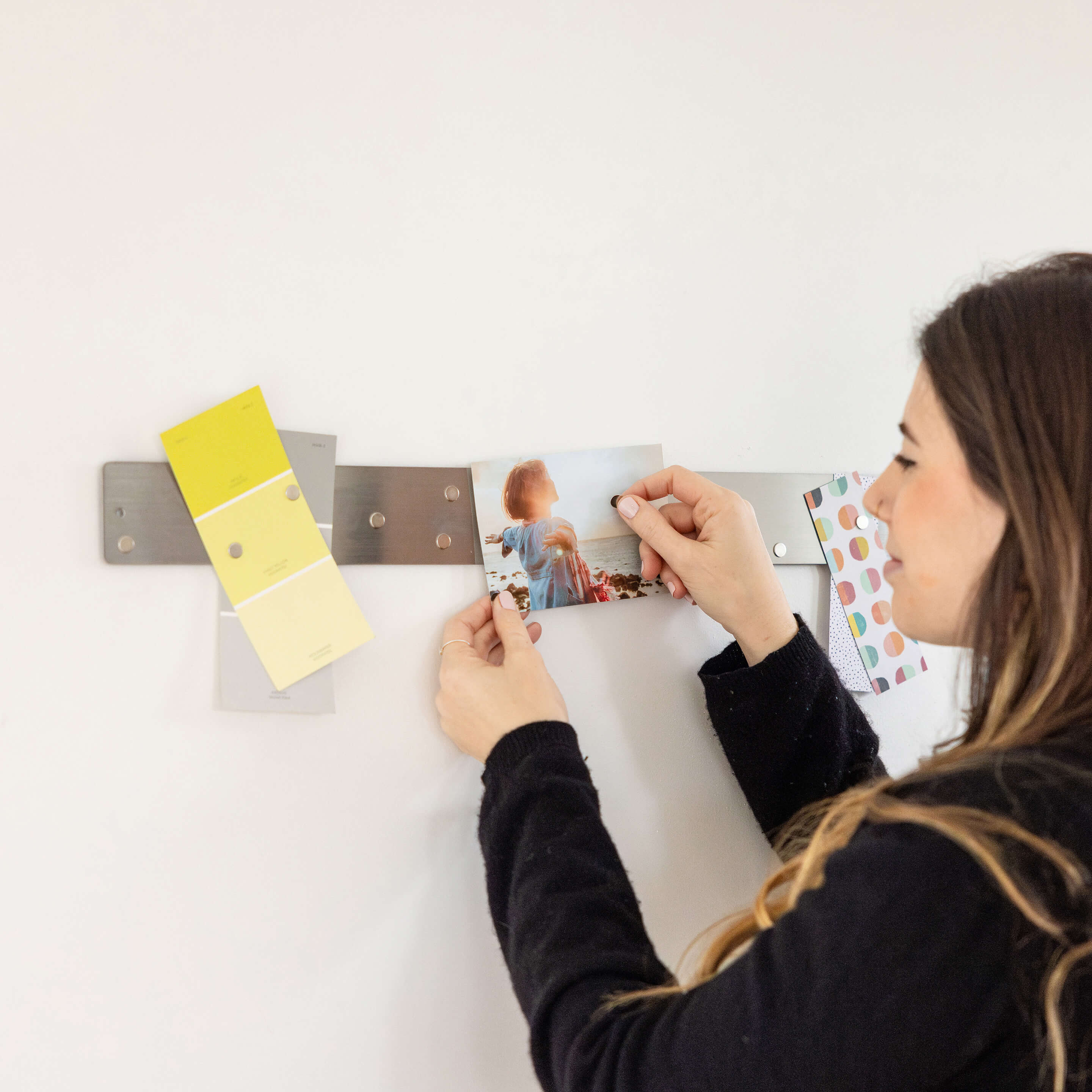
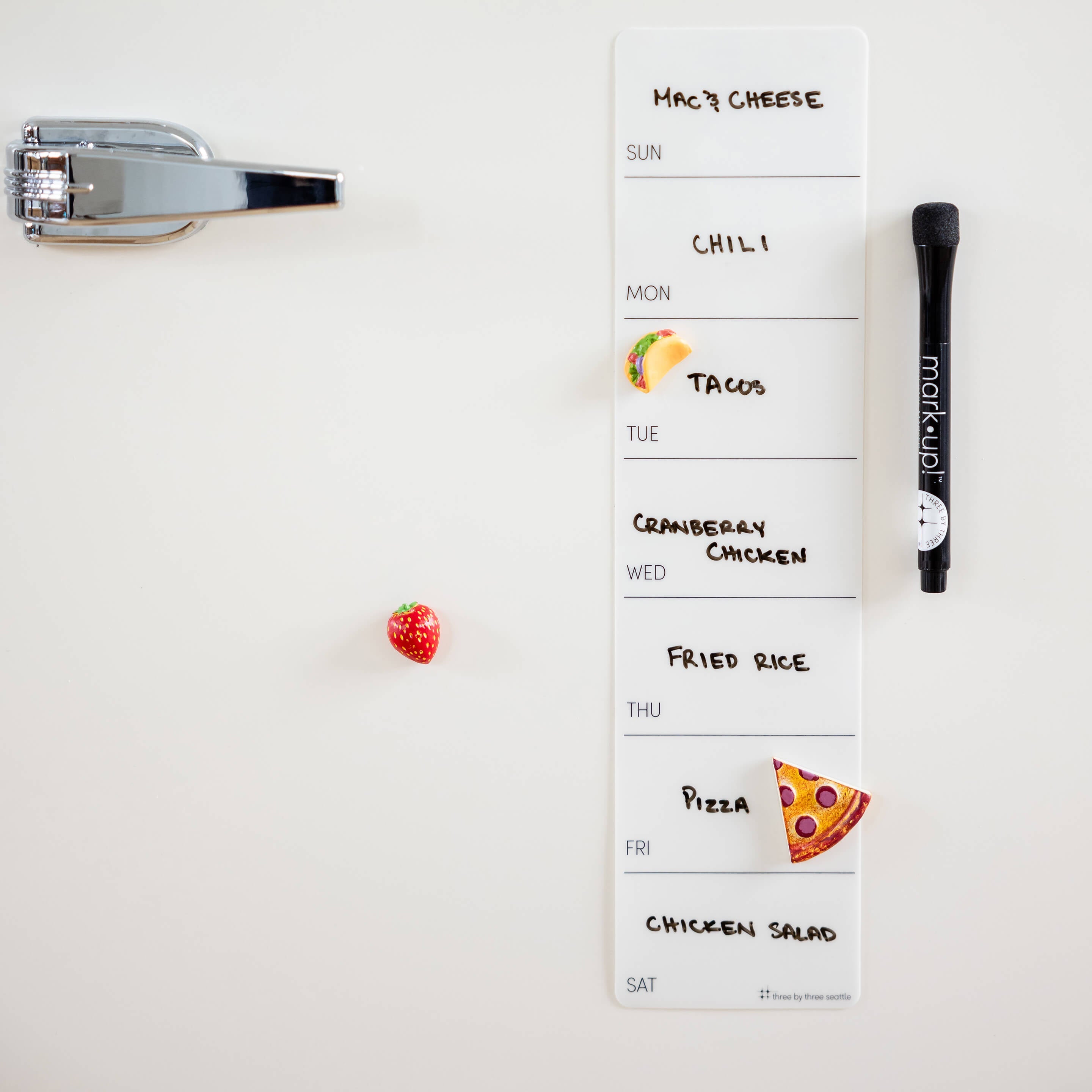
A dry erase planner above the desk moves your schedule out of your head and off the monitor bezel where sticky notes tend to collect. Deadlines you can see from your chair are deadlines that stop ambushing you, because you glance at them a dozen times a day without meaning to. Wipe and rewrite each Monday; it doubles as a two-minute weekly review ritual that forces you to actually look at what's coming instead of discovering it the morning it's due.
Corral the cables
A desk reset that ignores cables is only half finished — chargers, mouse cords, and the dongle you need twice a year tend to pool into a knot behind the monitor that undoes the tidy look in about a week. A small felt bin tucked at the back of the desk or mounted underneath keeps cables coiled and out of sight without cutting off access, and it means unplugging your laptop to take it to a meeting doesn't require untangling anything first.
End-of-day: the two-minute close
The desks that stay organized share one habit: a closing routine. Pens back in their bin, papers pinned or filed, tomorrow's top task written on the planner, surface wiped back down to the every-day essentials. You're not cleaning — you're setting up tomorrow's first hour, so that walking in the next morning feels like arriving at a desk that's ready for you instead of one still holding yesterday's mess.
Frequently asked questions
How long does a full desk reset actually take?
Under an hour for most desks — clear everything to bare wood, then let items earn their way back based on daily use.
What goes in the top desk drawer?
Only what you reach for daily, each item in its own compartment using metal stacking organizers. Weekly-use items go in the second drawer; anything used less than weekly leaves the desk.
What's the two-minute close routine?
Pens back in their bin, papers pinned or filed, and tomorrow's top task written on the planner — it sets up tomorrow's first hour instead of just tidying today's mess.
What should I use for quick notes instead of sticky notes?
A dedicated jOTBLOCK sketchpad — jot, tear, done. It gives scraps one consistent home instead of letting sticky notes multiply into wallpaper.
How often should the desk planner get wiped and rewritten?
Weekly, ideally Monday morning — it doubles as a two-minute review ritual that gets the week's deadlines out of your head and onto the wall.