












Stacking Bins: How to Maximize Vertical Space in Any Closet
Most closets waste their single best storage opportunity, and it is hiding in plain sight: the empty air above the shelf and below the hanging clothes. We instinctively store things on flat surfaces and leave the vertical space empty, which is why a closet can feel full while half its actual capacity goes unused.
Stacking bins are the simplest, most affordable way to claim that vertical space and roughly double what a closet can hold. They turn dead air into organized, accessible levels without adding a single shelf. Here is how to use stacking bins to get dramatically more out of any closet.
Why vertical space is the biggest win
Look at any closet shelf and you will usually see a foot or more of unused height above whatever is sitting on it. That empty space is the highest-return opportunity in closet organization, and stacking bins are how you capture it, building a second and even third level where there was only air.
The same goes for the closet floor, which tends to become a pile rather than usable storage. Stacking bins bring order to the floor too, turning a heap of shoes and bags into neat, labeled levels you can actually access.
Group by category, one bin per type
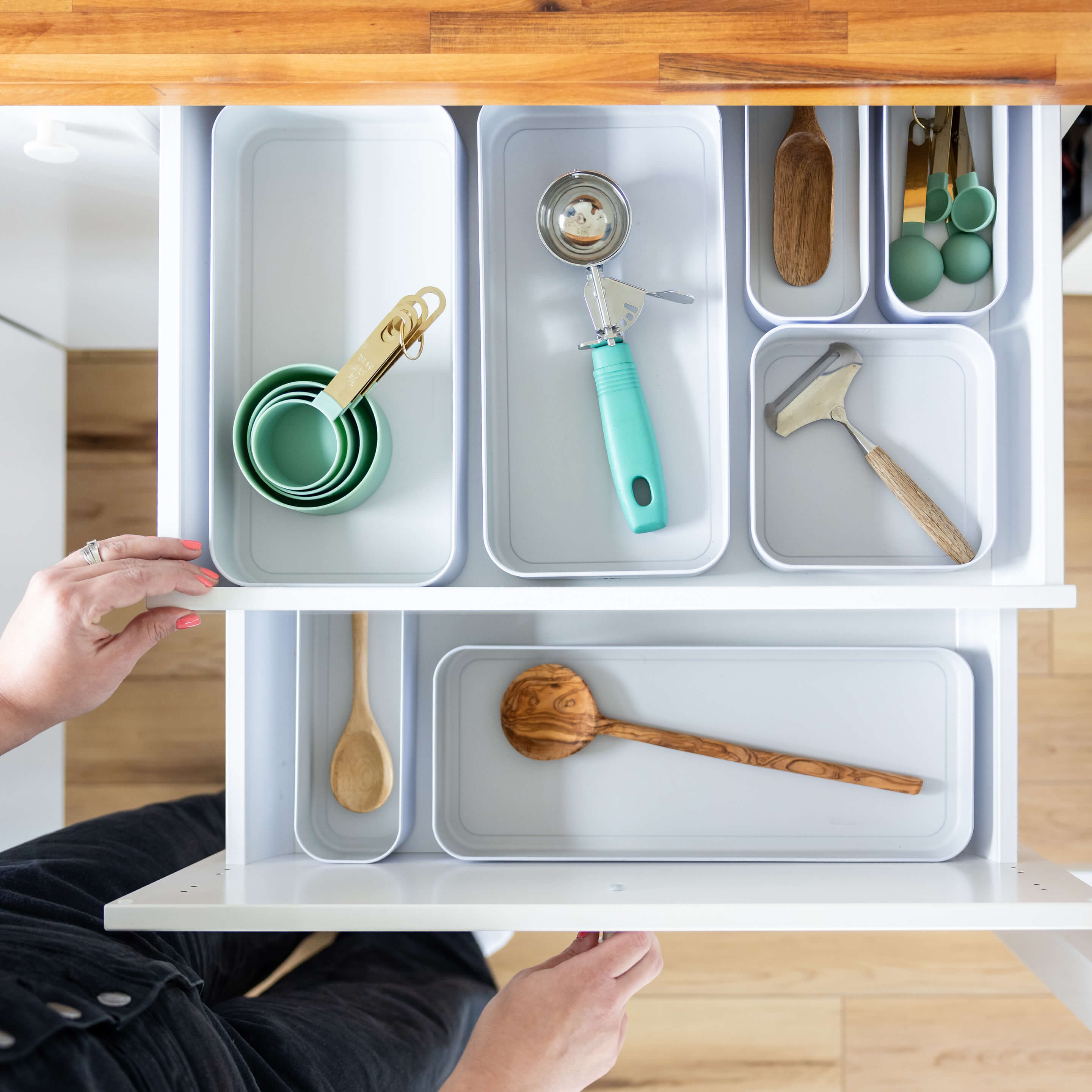
Give every bin a clear job: off-season clothes in one, accessories in another, shoes or bags in a third, extra bedding in a fourth. Stacking bins keep categories cleanly separated and pull out without disturbing the rest, while soft felt storage bins are ideal for delicate, foldable items like sweaters and scarves.
Grouping by category is what makes the bins genuinely useful rather than just neat-looking. When each bin holds one kind of thing, you always know where to look and where to put things back.
Put the hardest-to-reach spots to work
The high shelf and the closet floor are prime stacking territory, and they are also where organization usually breaks down. Store rarely used items, like holiday clothes or luggage, up top, and keep everyday items at eye level where they are easy to grab.
Look for bins that nest inside one another when empty, so when a category is out of season or cleared out, the bins store flat instead of becoming clutter themselves. That small feature keeps your organizing supplies from creating a new storage problem.
Label so the system lasts
Stacking is efficient, but it does create one challenge: getting to a lower bin. Solve it with two habits. Label every bin clearly so you know its contents without unstacking, and store the bins you reach for most often at the top or at eye level, with rarely accessed bins on the bottom.
For deep or frequently accessed stacks, choose bins designed to open or pull out from the front, so you can reach the contents without lifting the bins above. A little planning here keeps the convenience of stacking from becoming a hassle.
Choose the right bins for the job
Not every bin suits every closet. Sturdy stacking bins handle shoes, supplies, and heavier items and hold their shape under weight. Breathable felt bins protect clothing and let fabrics breathe. Clear or labeled bins make finding things faster, while solid bins hide visual clutter for a calmer look.
Match the bin to the contents and the closet, and the whole system works harder. Browse closet and laundry storage to build a setup that fits your space and doubles your usable room.
Frequently asked questions
How do stacking bins save closet space?
They use the empty vertical height above a shelf and on the closet floor, turning unused air into two or three accessible levels of storage without adding any shelving. It is the highest-return move in closet organization.
What should I keep in stacking bins?
Group by category: off-season clothes, accessories, shoes, bags, or extra bedding. Soft items like sweaters do well in breathable felt bins, while sturdier stacking bins suit shoes, supplies, and heavier items.
How do I get to a lower bin without unstacking?
Label each bin and store the ones you reach for most at the top or at eye level. For deep or frequently used stacks, choose bins designed to open or pull out from the front so you can reach the contents directly.
Do stacking bins work in small closets?
Especially well. Small closets have the most to gain from using vertical space, and stacking bins turn a cramped, single-level closet into one with two or three usable tiers.
What kind of bins are best for a closet?
Sturdy stacking bins for shoes and heavier items, breathable felt bins for clothing, and clear or well-labeled bins so you can find things fast. Match the bin to its contents for the best results.