














Sports Gear Wrangling: One Home for Every Ball, Racket, and Cleat
Sports equipment is uniquely gifted at scattering — one cleat in the car, the shin guards behind the couch, the pump nowhere on Earth, the water bottle growing something in the bottom of a backpack. The Saturday-morning gear scramble isn't a discipline problem; it's a missing-address problem. Good sports gear storage fixes it at the source: give every piece of equipment exactly one address, make that address obvious, and the scramble mostly disappears on its own.
One bin per sport, not per kid
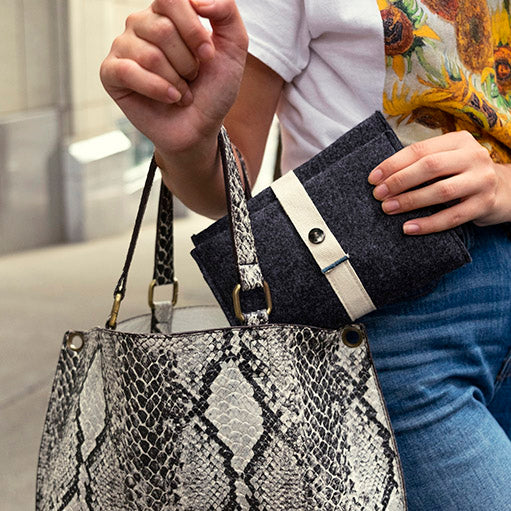
Organize by activity: the soccer felt bin holds ball, cleats, shin guards, water bottle — everything that specific sport needs and nothing else. Grab the bin, you have the sport, and you're out the door in the time it takes to load the car. Sorting by person feels intuitive at first, but it splits shared equipment across bins and doubles the hunting when two kids play the same sport or swap gear between seasons. Label by sport, not by name; siblings share the bin like they share the sport, and hand-me-down cleats don't require relabeling a whole bin when they move from one kid to the next.
The airlock rule
Gear's natural predator is the house — equipment that crosses the threshold disperses into bedrooms, under couches, and into the bottom of backpacks where it's never seen again. Keep the felt bins at the transition point — garage shelf, entryway corner, car trunk for whatever sport is currently in season — and make the rule physical: gear goes from body to bin at the door, every time, no detour through the living room. Post-practice exhaustion actually helps enforce this; dropping things in a bin that's right there takes exactly as much effort as dropping them on the floor, so the path of least resistance and the organized path become the same path.
Wet gear needs to breathe before it's bagged
Cleats, shin guards, and mouth guards go straight from a sweaty field into a closed bin, which is exactly how a gear bin starts to smell like a locker room. Give sweaty items a short open-air stop — a hook by the door, a mesh bag, even just a spot on the garage shelf — before they join the rest of the equipment in the sealed felt bin. This one extra step, maybe fifteen minutes of drying time, is the difference between a gear bin that smells fine and one that announces itself from across the garage. It also extends the life of the equipment itself, since damp gear packed away wet breaks down faster than gear that's allowed to dry.
In-season forward, off-season up
The current sport's gear lives at grab height, right where a rushed weekday morning needs it to be. Everything off-season goes up a shelf in the same felt bins — come spring, swap them, and the soccer bin drops down while the winter gear moves up. It's the closet rotation principle wearing cleats, and it halves the daily visual pile since you're only looking at what's actually relevant this month. This swap is also a natural checkpoint to catch gear that's about to be outgrown, since you're already handling every piece twice a year.
A small maintenance kit lives with the gear
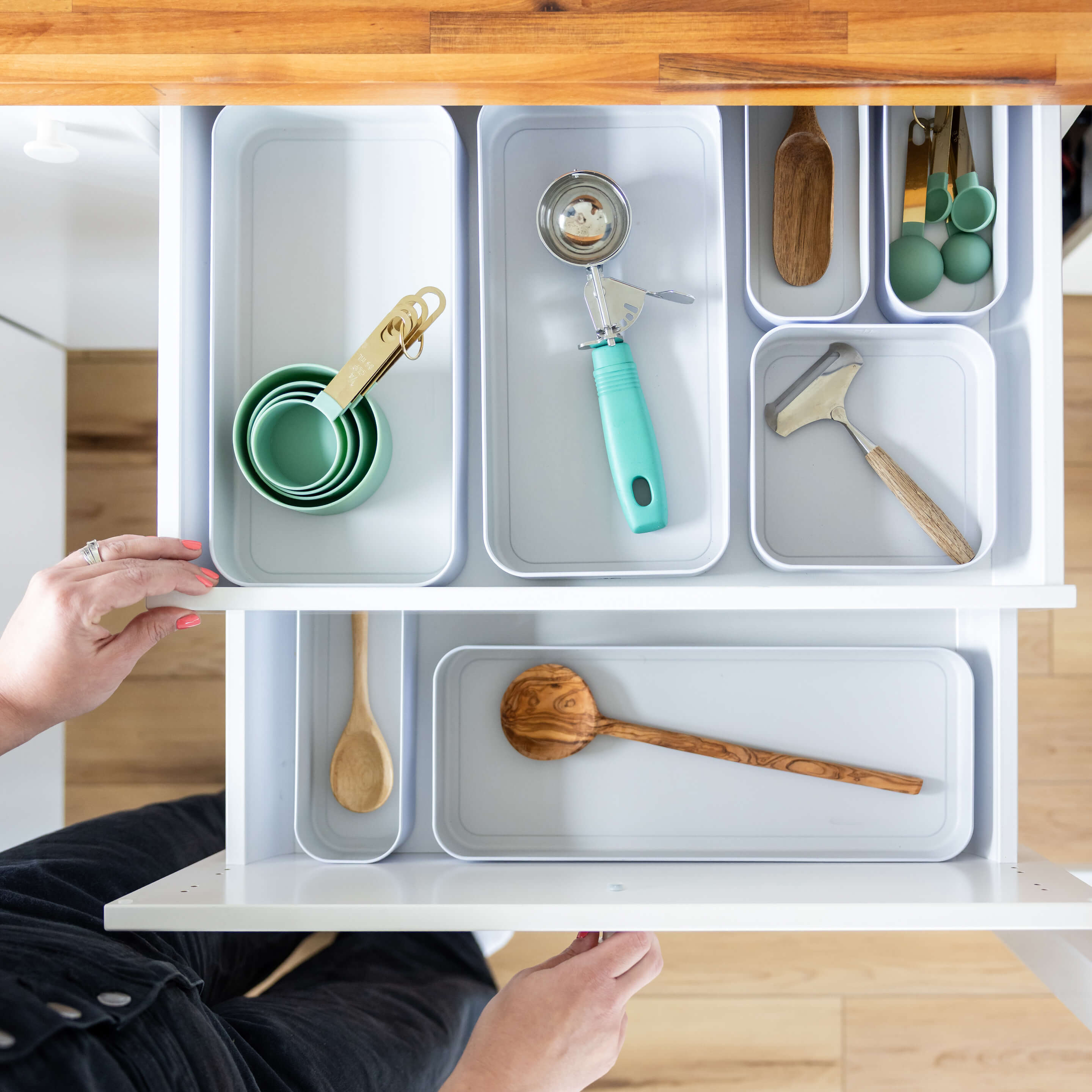
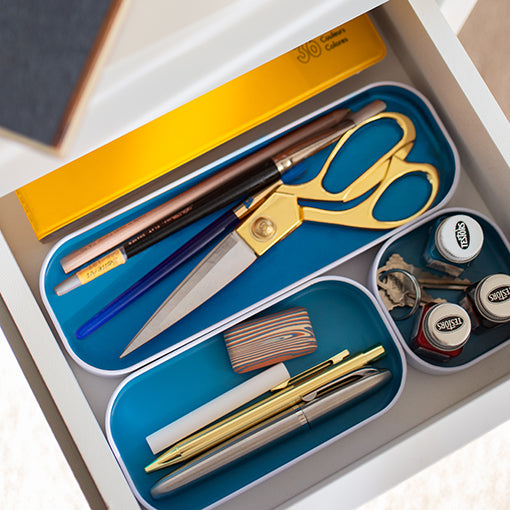
Shin guard straps break, cleat laces snap, and a flat ball is nobody's idea of a good Saturday morning. A small drawer organizer or a stacking organizer tucked next to the sport bins — holding a pump, spare laces, tape, and a needle for shin guard straps — turns a five-minute pregame fix into exactly that instead of a mad dash to a store that's already closed. Keeping the fix-it kit adjacent to the gear itself means it actually gets used instead of living in a junk drawer three rooms away.
The season-end check
When a season closes, spend five minutes in the bin: what's outgrown, broken, or needed for next year? September-you, holding a cleat two sizes too small on the first practice morning, is begging you to do this in June instead. This is also the moment to wipe down the felt bin itself and toss anything that quietly died mid-season — a cracked mouth guard case, a shin guard with a snapped strap that never got fixed — so next season starts clean rather than inheriting this season's clutter.
Frequently asked questions
Should gear be organized by sport or by kid?
By sport — a soccer bin with ball, cleats, and shin guards means grabbing one bin gets you the whole sport, and siblings can share it.
Where should gear bins live?
At the transition point — garage shelf, entryway corner, or car trunk — so gear goes from body to bin right at the door.
What should happen at the end of a season?
A five-minute check of what's outgrown, broken, or needed for next year, done in the off-season instead of on the first morning of the next one.
What's the "airlock rule"?
Keeping gear bins right at the transition point between outside and inside, so equipment goes from body to bin at the door instead of dispersing through the house.
How should in-season and off-season gear be stored differently?
In-season gear stays at grab height for daily access; off-season gear moves up a shelf in the same felt bins until the next season starts.