













How to Create an Entryway Drop Zone That Actually Works
The entryway is the hardest-working three square feet in your home. Keys, mail, sunglasses, dog leashes, the permission slip that needs signing — everything lands there, and without a system, "lands there" becomes "lives there in a pile." It's not that anyone in the house is messy — it's that the entryway was never given a job description, so everyone improvises their own.
A drop zone works when every category of clutter has an obvious home the moment you walk in, and that's really what separates a working command center from a pile that happens to sit near the front door. Good entryway organization isn't about buying more furniture — it's about assigning every object a single, obvious destination. Here's how to build one, even in a small space, using a handful of felt bins, a board, and a little discipline about what earns a spot.
Start with what actually hits the table
Before buying anything, spend three days noticing what accumulates by your door. For most households it's five categories: keys and wallets, mail, bags, shoes, and the miscellaneous stream of small objects that come out of pockets — sunglasses, hair ties, the receipt from the gas station. Your drop zone needs one designated spot per category — no more, no less. Systems fail when they're designed for an imaginary tidy person instead of the real people walking through the door every day with their arms full. Write the five categories down if you have to; that list keeps you from buying an organizer that solves a problem you don't actually have.
Give small items a bin, not a surface
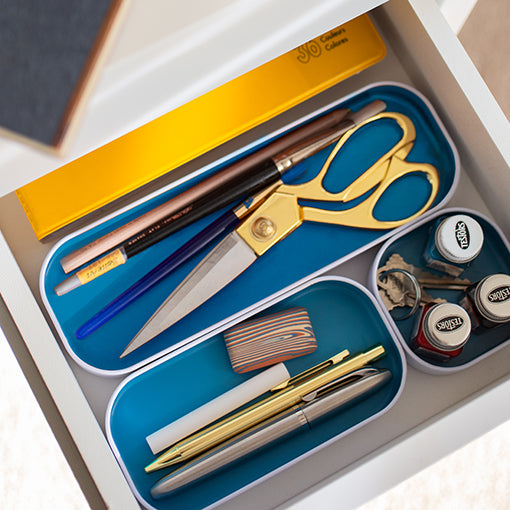
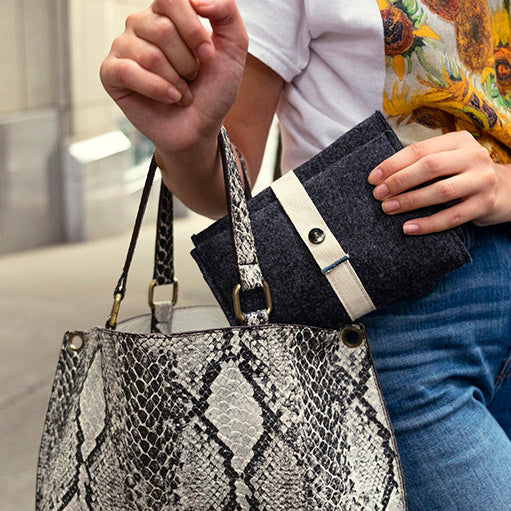
Flat surfaces are where clutter breeds — a bowl, a shelf, or a console table all issue the same invitation: set it down here and walk away. Swap the "everything bowl" for a couple of soft-sided containers — recycled felt storage bins are ideal here because they're forgiving in tight spaces, come in multiple nesting sizes, and look intentional rather than industrial sitting on a shelf or bench. Use one felt bin for keys and wallets and a second felt bin for the pocket-stream of small odds and ends. When the bin is full, that's your visual cue to process it. Felt bins also hide the mess from view while keeping it fully accessible, so the entryway still looks calm even on a chaotic Tuesday.
Take the paper vertical
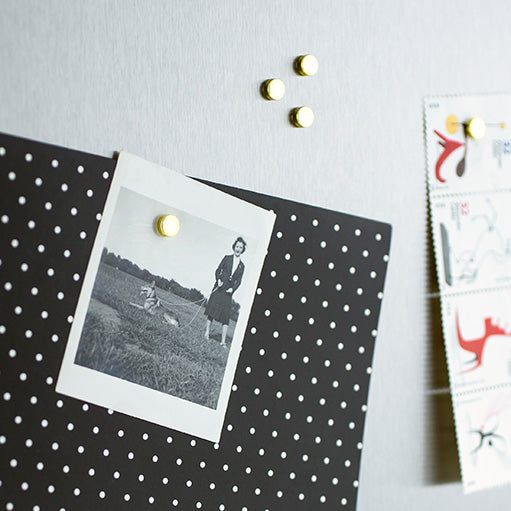
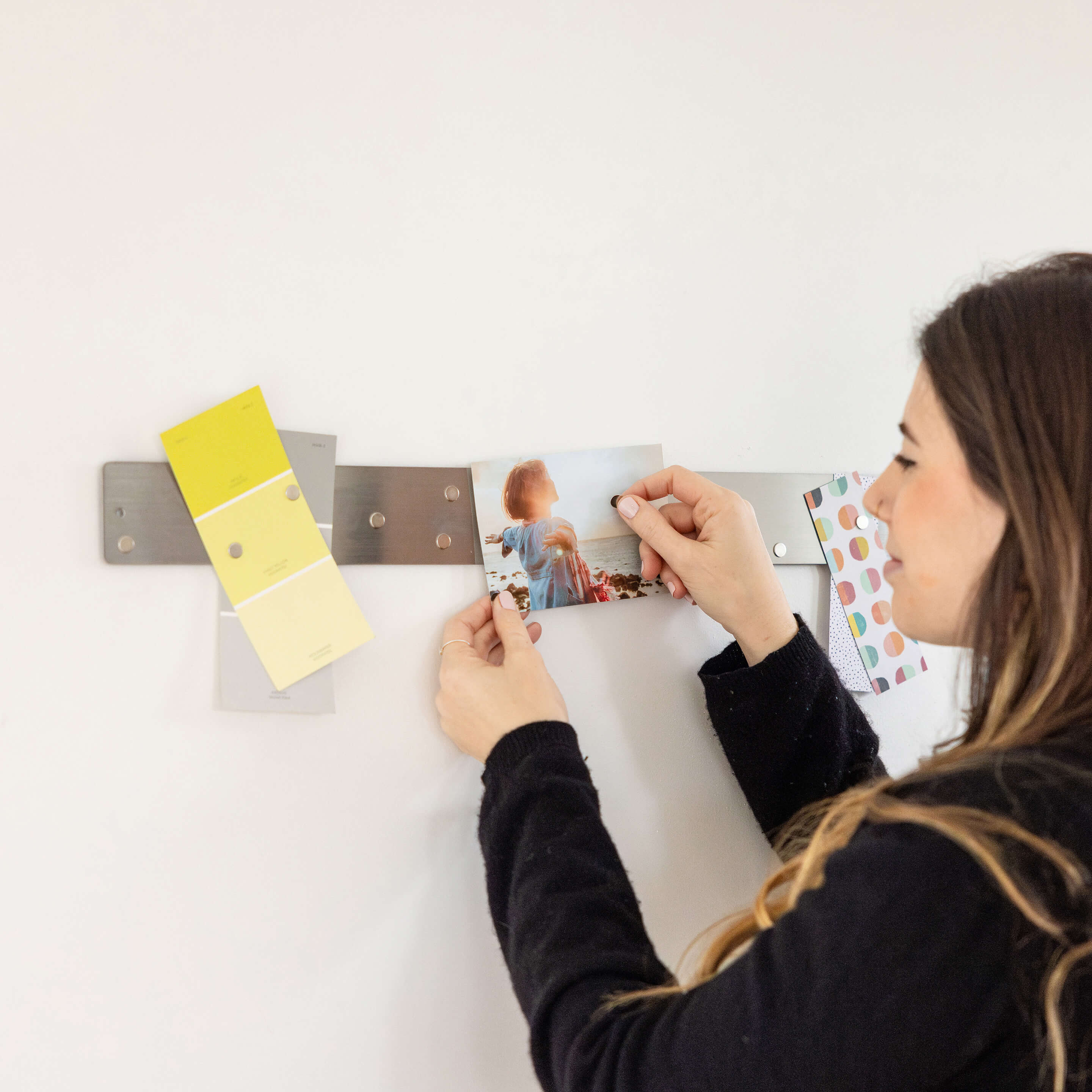
Mail is the entryway's most persistent enemy because it arrives daily and multiplies without anyone inviting it to. The fix is getting it off the horizontal surface entirely, because paper on a table becomes paper you stop seeing within about a day. A magnetic bulletin board by the door gives invitations, school notices, and the "don't forget" items a visible home without a single pushpin hole in your wall. The rule: paper gets pinned or recycled the day it arrives. Nothing rests flat. If you're short on wall space, a magnetic strip bulletin board mounted in a narrow gap works just as well.
Put the week where everyone can see it
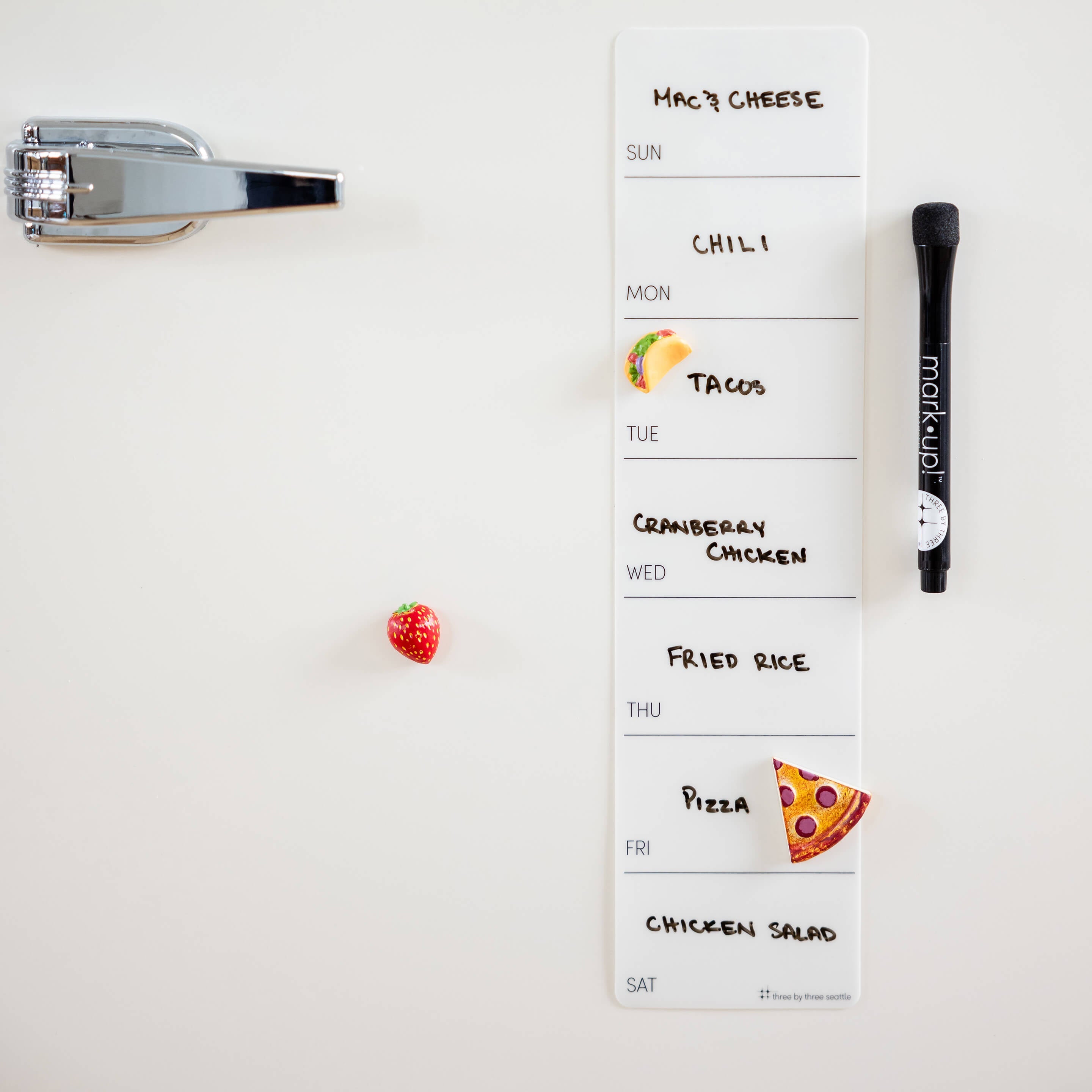
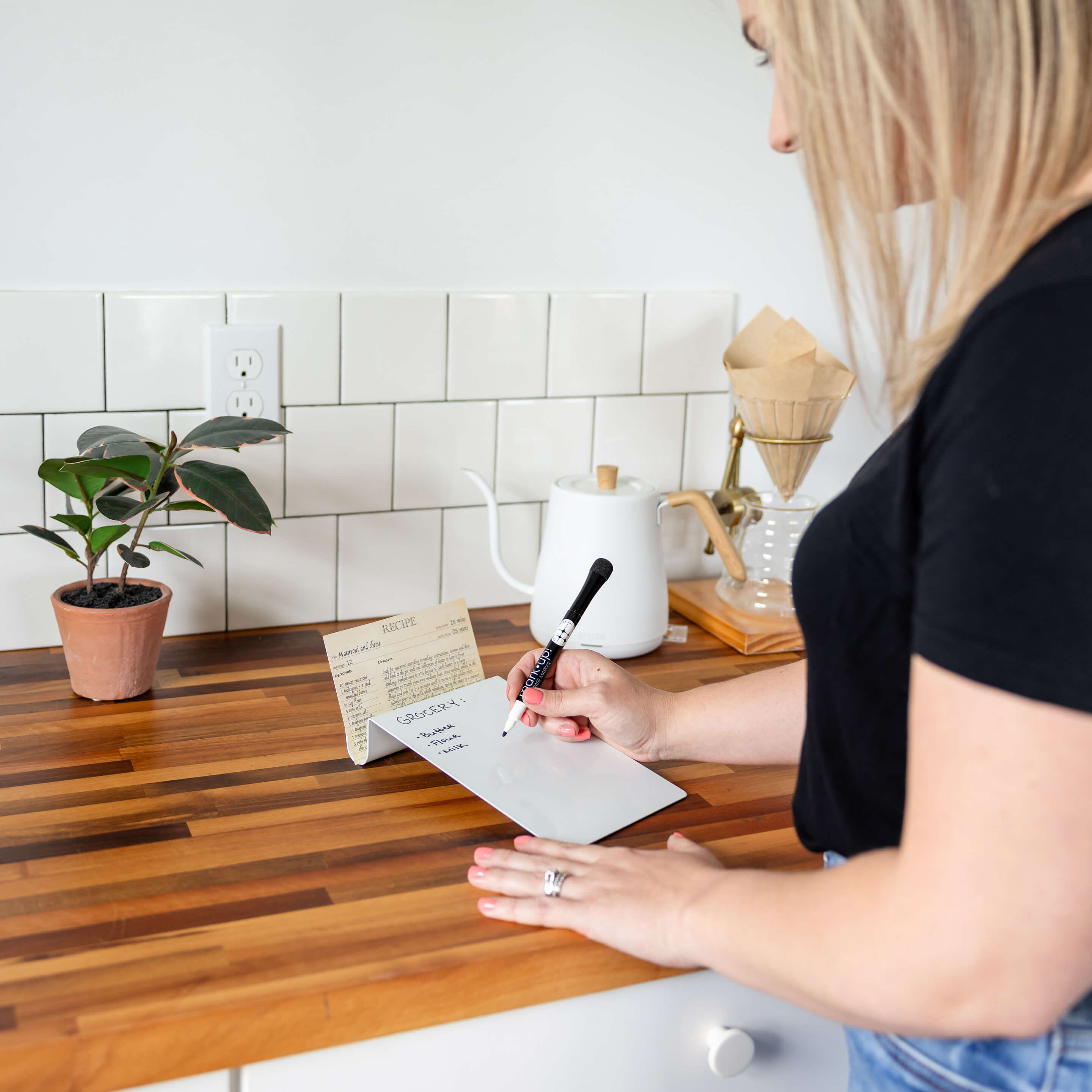
The difference between an entryway and a true command center is a calendar. A reusable dry erase planner mounted at eye level turns the drop zone into the place where the household actually coordinates — practices, pickups, dinner plans, the dentist appointment nobody wrote down anywhere else. Wipe it clean Sunday night, write the new week, and the "wait, that's today?" conversations mostly disappear because the information is sitting where everyone already looks on the way out. A dry erase planner earns its spot fast: it costs nothing to update, and every person in the house sees it whether or not they remember to check an app.
Zone the floor, not just the wall
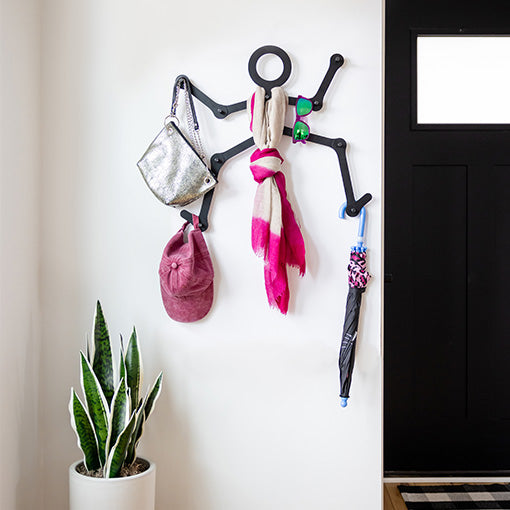
Vertical storage handles paper and small objects, but shoes and bags still need a plan or they'll spread across the floor in a fan pattern that grows wider every week. A slim shoe tray or a designated shelf keeps footwear contained to one strip, and a hook or two for bags keeps them off the floor entirely. If floor space is tight, favor hooks over baskets; anything hanging costs zero square footage.
Make leaving easier than arriving
The final test of a drop zone isn't how it handles coming home — it's whether you can leave in ninety seconds. Keys visible, bag on its hook, the note you need pinned where you'll see it on the way out, shoes within reach instead of scattered under the bench. When the answer is yes, the system is done. Resist the urge to add more once the five core categories are handled — a drop zone that does its job doesn't need embellishing.
Frequently asked questions
Do I need a mudroom for a drop zone to work?
No. The system is about assigning one felt bin or hook per category, not square footage — it works in a single wall niche just as well as a full mudroom.
How many bins does a typical entryway need?
Most households do fine with two to three felt bins: one for keys and wallets, one for the daily pocket-stream, and a shared catch-all for anything else.
Will a magnetic board damage rental walls?
No — that's the point. It hangs with no pushpins, so it's fully renter-friendly and won't put holes in painted walls.
What if my entryway is just a hallway with no closet?
That's fine — a drop zone doesn't require built-ins. A wall-mounted magnetic board, a hook, and one or two felt bins on a shelf cover all five categories in a few square feet.
How do I keep the system from sliding back into a pile?
Give every category exactly one home and stick to it. The moment something doesn't have a spot, it becomes the seed of the next pile.